In memory of George Robert “Bob” Pettit II (8 June 1929 – 21 September 2021)

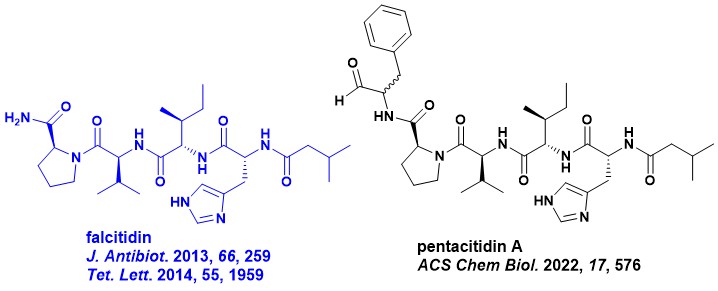
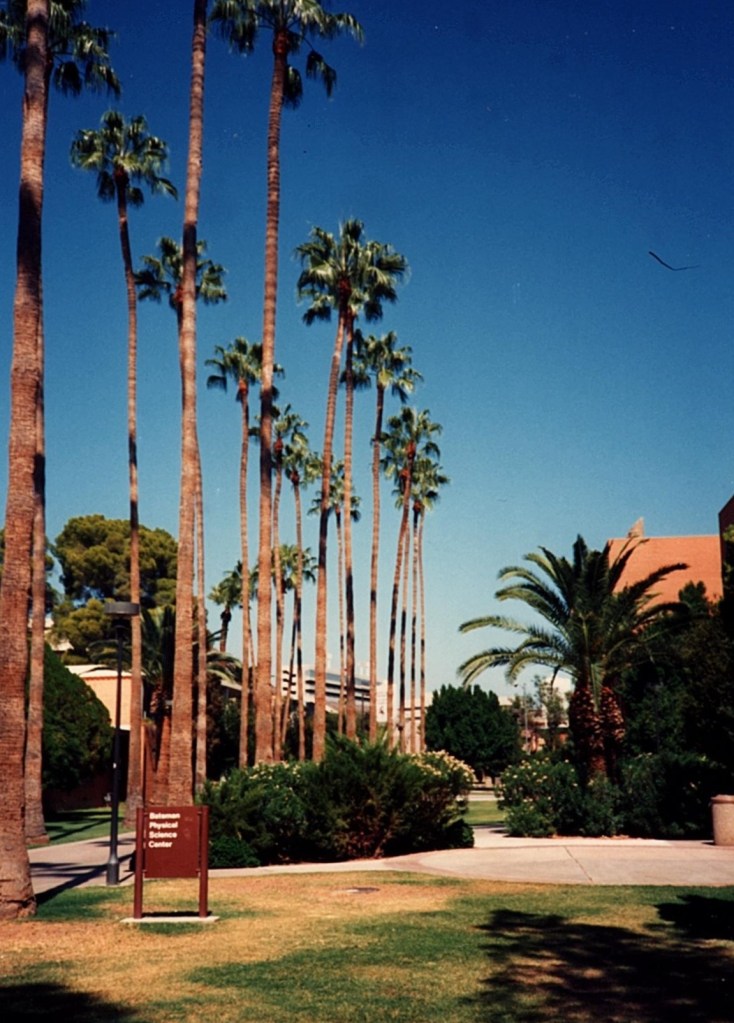
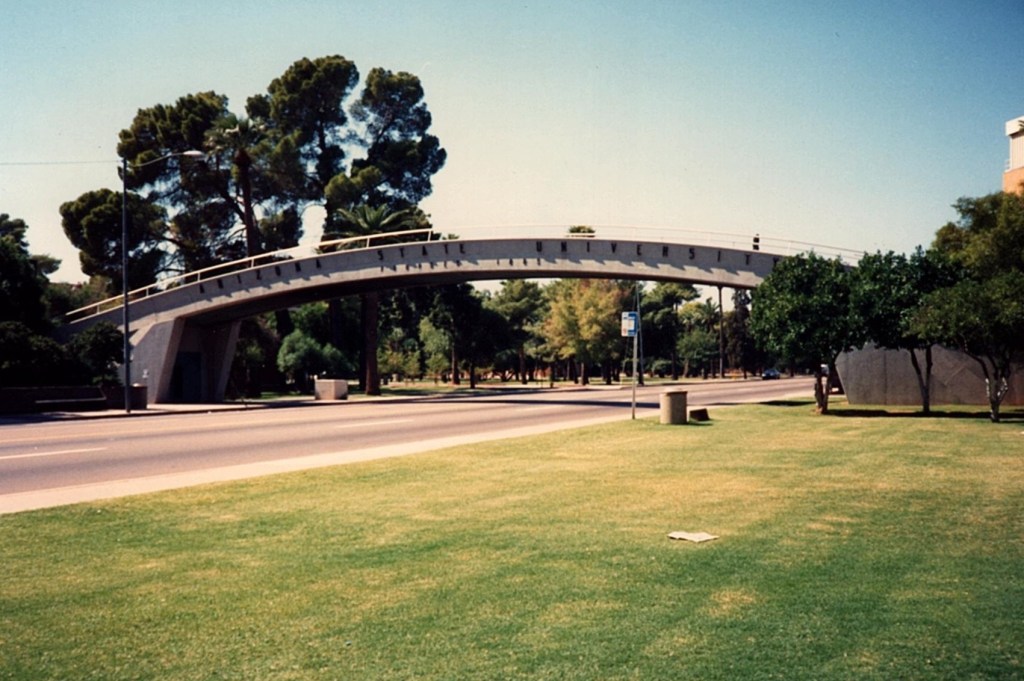
I wanted to write a short note to commemorate my postdoc supervisor, Prof Bob Pettit, who passed away in September last year. He was a colossus of natural product chemistry and cancer research who made seminal discoveries such as the bryostatins, dolastatins, combretastatins, cephalostatins and spongistatins. I worked for nearly two years from 1993 at the Cancer Research Institute at Arizona State University. Phoenix was a great place to live, and I had a very enjoyable times working with many colleagues in the lab and exploring Phoenix, Arizona and beyond.

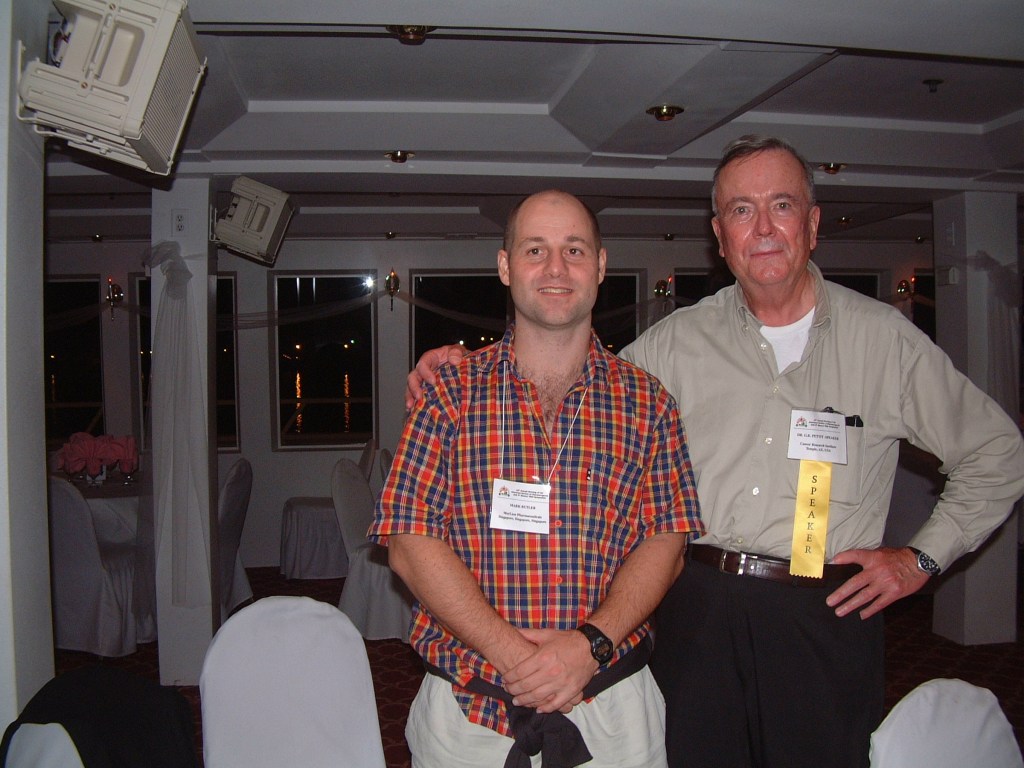
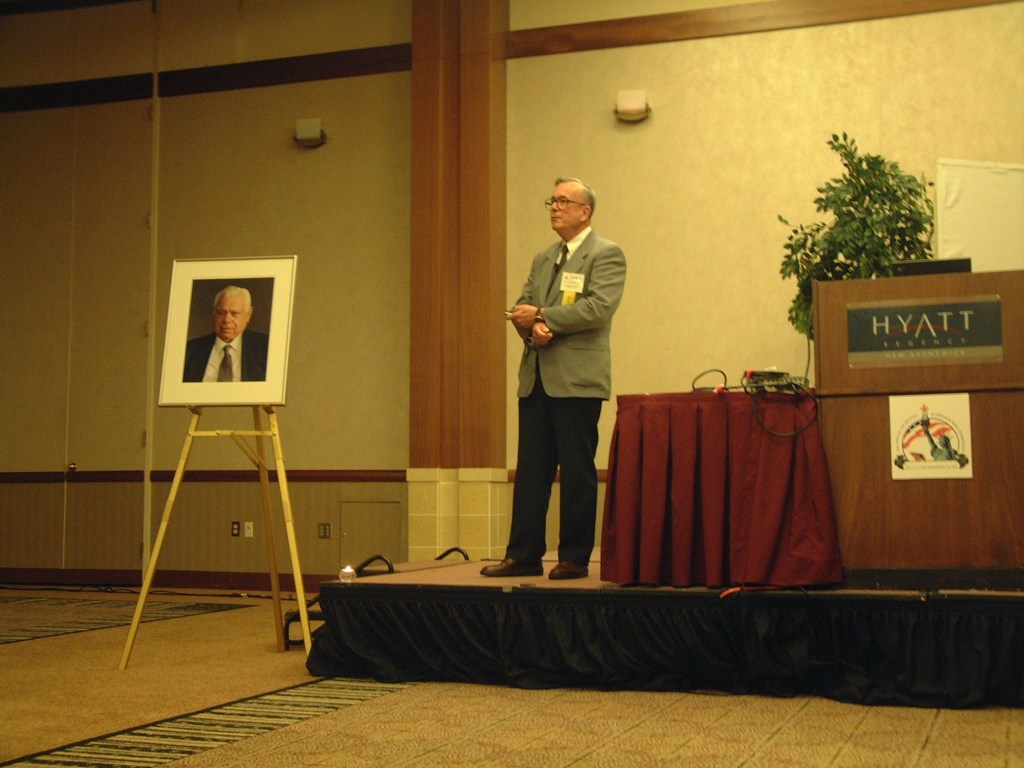
The last (and only) picture I have of Bob and I was taken on the New York Harbour cruise at the 43rd ASP Annual Meeting held from 27 –31 July 2002 in New Brunswick, New Jersey, as well as a picture of him delivering his lecture at this conference.

Mark Butler and Bob Pettit, ASP Conference 2002

I had been in Singapore for a few by then and was starting to work on antibacterials. I asked him if he was interested in also looking at antibiotics. I still remember him saying to me, “Mark, I will look at antibiotics after I have solved cancer”. RIP.

Bob Pettit lecture in 2002 at the 43rd ASP Annual Meeting, New Jersey.

Antibacterial pipeline discussion available on YouTube…

A week or so ago, Prabha Fernandes (GARDP and National Biodefense Science Board), Peter Beyer (WHO) and I were involved in a discussion with Cesar Arias (AAC Chief Editor and Houston Methodist Hospital) about the state of the antibacterial pipeline as a companion to our recent Antimicrobial Agents and Chemotherapy review. The podcast link is here and the YouTube video is below.

The discussion first talks about the WHO’s current roles in antimicrobial resistance (AMR). Next, the state of the antibacterial pipeline was discussed and finishes with some closing remarks around the future of antibacterial research.

New gargantulides reported – an amazing class of 52-membered macrolactones

I wanted to share a recent publication on the discovery of gargantulide B and C, which are complex glycosylated 52 membered macrolactones with antibacterial activity. The gargantulide story started when I was leading the Natural Product Chemistry at MerLion Pharmaceuticals in Singapore around 2006. We were very interested in discovery new antibacterials and identified an extract from a Streptomyces sp. that had Gram-positive activity against MRSA. In this strain, gargantulides could be produced in high titres and the major component had a molecular formula of C105H200N2O38. With a molecular formula like this, the structure was always going to be challenging. It ended up being the first structure that I couldn’t assign a planar structure.

We then approached Bill Gerwick (Scripps Institute of Oceanography/UCSD) and ask him if his team was up for solving a very complex structure! It was indeed challenging with a lot of overlapping NMR resonances – even at 900 MHz. The structure was finalised a few years later by Jung-Rae Rho, who was visiting Bill’s labs from Kunsan National University. His structure is a tour de force of structure elucidation and we published the structure of gargantulide A in Organic Letters in 2015. The paper even made it into Chemical and Engineering News (p 6, 16 March 2015) with the apt title “Newfound antibiotic is gargantuan and unfortunately deadly”. Initially, we were excited at MerLion to have identified a new antibacterial class with activity against both MRSA and Clostridioides difficile, but garganulide A was found to be toxic during preliminary PK studies. Unfortunately, this is how drug discovery often turns out.

Back onto the recent Organic Chemistry Frontiers report by a team from the Fundación MEDINA in Spain and The Novo Nordisk Foundation Center for Biosustainability in Denmark. They identified an Amycolatopsis sp. that produced gargantulides. They were able to unravel and then use the biosynthetic gene cluster (very large!), along with NMR, to help confirm the structures and stereochemistry of two analogues gargantulide B and C. This team were then were able to confirm our planar structure of gargantulide A and revise some stereochemical centres. The new analogues also had antibacterial activity. Awesome work!

When asked about my “best papers” in a job interview once, the gargantulide A paper definitely made the few! It was great to see further work in this area.

Gargantulide A paper link and Gargantulide B and C paper link.

MBA graduation day…

On 13 December 2017, I graduated with an MBA from The University of Queensland, along with an amazing group of people from a wide variety of backgrounds.

The last two years have been an eye opening experience and, in some ways, I am sad that it has finished – although I won’t miss doing the exams and the final few hours of trying to get assignments in on time.

DRAHvnqU8AA69Kn

The UQ academic dress only has three types: Degree (pearl white), Masters (blue, shown below) and PhD (crimson), which is different to my first alma mater, University of Melbourne, where every faculty has their own colour.