
Natural products helped establish modern antifungal therapy; synthetic chemistry tells the other half of the story. Following our review of natural product-inspired antifungal drugs, Rob Capon and I have now published a companion review examining synthetic antifungals introduced or approved for human use also published in Antibiotics. The review covers 70 therapeutic entities across 19 structural classes from late 19th century topical antiseptics to 21st century oral and intravenous medicines used against serious invasive fungal infections. For each, we trace its clinical introduction, chemistry, modes of action, resistance and evidence of continuing use.
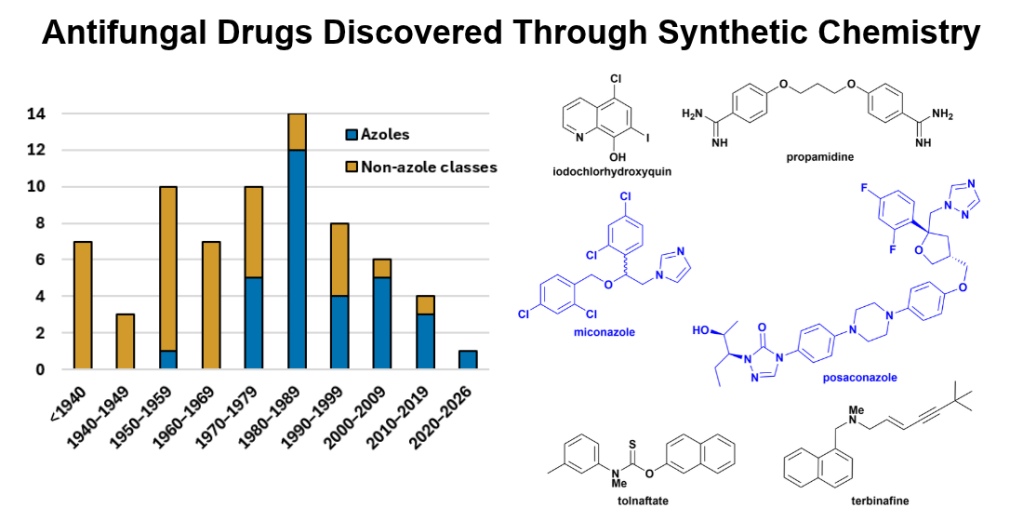
Before modern antifungal medicines. The earliest synthetic agents emerged in a very different therapeutic and regulatory environment. Hydroxyquinolines, gentian violet and other antiseptics entered practice when treatment largely focused on superficial infections. Some were adapted from compounds developed for other purposes; others combined antibacterial and antifungal activity without the fungal-selective targets we now seek in drug discovery. Their histories also require careful terminology. “Introduced into human use” is not synonymous with “approved” under a modern regulatory system. Nor does historical use establish that a medicine remains available today. Our review distinguishes these questions rather than treating them as interchangeable.
The azole transformation. Post the discovery and development of the polyenes in the 1950s, the rise of the synthetic azoles is one the most important advances in antifungal therapy. Our dataset includes 31 azole agents: one benzimidazole, 20 imidazoles, nine triazoles and one tetrazole. From 1970 onwards, azoles accounted for 30 of the 43 synthetic entities approved for human use. Their importance extends beyond the number of compounds. Broad-spectrum activity and the availability of oral and, for selected agents, intravenous, formulations substantially expanded treatment options for systemic and invasive mycoses.
Beyond the azoles. The synthetic contribution is broader than this dominant class. Thiocarbamates, hydroxypyridones, benzylamines, morpholines and oxaboroles illustrate the chemical diversity explored in developing antifungal medicines. The review places these agents alongside less familiar historical classes, including diamidines and benzothiazoles, to document the wider development of the field. This longer view matters as a history based only on medicines familiar today misses both earlier therapeutic approaches and compounds subsequently displaced by more useful treatments.
Natural products and synthetics: two complementary histories. Our reviews document 30 natural product-inspired and 70 synthetic antifungal therapeutic entities; overall, an even 100 therapeutics. Together, they trace the development of human antifungal treatment from 19th century preparations to contemporary medicines, while distinguishing chemical origin, historical introduction and continuing use.

