Blog

Enmetazobactam: Building on a Legacy to Combat Resistance

🦠 Since the introduction of penicillins in the 1940s, β-lactam antibiotics have been a cornerstone of modern medicine. However, bacteria quickly fought back by producing β-lactamase enzymes that degrade these antibiotics before they can exert their effect. To overcome this, β-lactamase inhibitors (BLIs) were developed to be co-administered with β-lactam antibiotics, protecting them by irreversibly binding and inactivating β-lactamase enzymes — thereby restoring the antibiotics’ ability to target penicillin-binding proteins (PBPs) and kill the bacteria.

⚙️The discovery of the first BLI, clavulanic acid from Streptomyces clavuligerus, was a key breakthrough. Most people have been prescribed Augmentin®, the combination of amoxicillin and clavulanic acid that has been in use since 1981. This was followed by synthetic inhibitors like sulbactam and tazobactam, introduced in the mid-1980s and early 1990s respectively. More recently, two new classes of non-β-lactam inhibitors, diazabicyclooctanes (DBOs) and boronates, have been developed.

💡Fast forward to the approval in February 2024 of a new BLI/β-lactam combination: enmetazobactam + cefepime (marketed as Exblifep®) has now been approved in the USA, Europe, and India for the treatment of complicated urinary tract infections (cUTIs). The enmetazobactam story began in India, where researchers at Orchid Research Laboratories identified that adding a methyl group to the triazole ring of tazobactam created a zwitterionic BLI. This small chemical change dramatically improved bacterial penetration and pharmacokinetic properties. Allecra Therapeutics (headquartered in Germany with operations in France) led the clinical development.
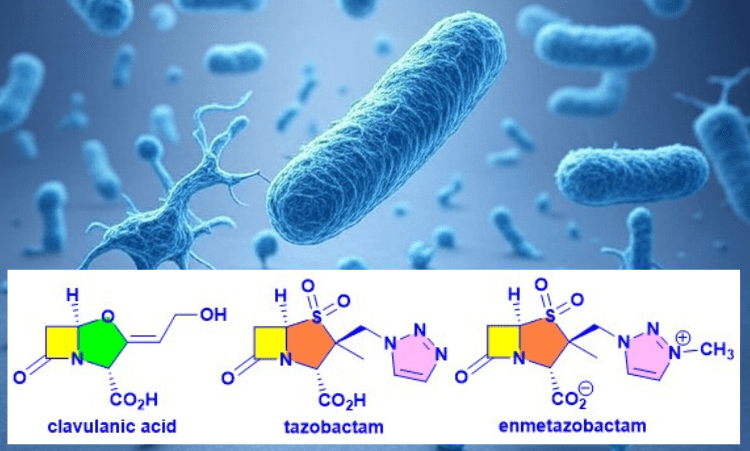
Structures of clavulanic acid, tazobactam, enmetazobactam; background image created by myself and Grok showing lysed and un-lysed bacteria

🌟 Enmetazobactam is a great example of how thoughtful chemical modifications, combined with an understanding of resistance mechanisms, can deliver clinical impact.

#AMR #IndiaInnovation #Antibiotics #DrugDevelopment #InfectiousDiseases #Innovation
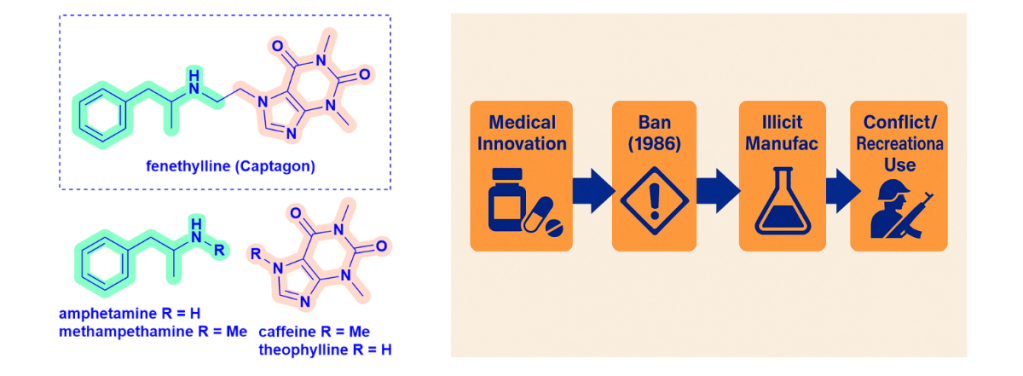
From 1960s Drug to Modern Conflict Stimulant: The Curious Case of Fenethylline (Captagon)

Continuing on my blog posts on natural products, antibiotics and other topics…

💠 During World War II, both Allied and Axis forces used stimulants like amphetamine and methamphetamine to maintain alertness in combat. But another related compound—fenethylline, better known as Captagon—has taken a darker path in recent decades. Amphetamine ties back to natural products through the exploration of chemistry around ephedrine, originally isolated from Ephedra sinica in the 1880s. I will expand upon this link in a later blog.

💠 Developed in the early 1960s, fenethylline is a co-drug of amphetamine and theophylline, joined by an ethane bridge. It was originally prescribed for hyperkinesis (now ADHD), narcolepsy, and depression, often preferred over amphetamines for its more tolerable profile. Its clinical use was short-lived, however—it was banned in most countries by 1986 following WHO’s inclusion under the Convention on Psychotropic Substances.

💠 Pharmacologically, fenethylline is more lipophilic, enabling rapid absorption into the CNS. It metabolises into amphetamine (24.5%) and theophylline (13.7%, caffeine related compound), working synergistically: amphetamine boosts dopamine signalling as a potent stimulant, while theophylline provides weaker stimulation and bronchodilation.

💠 Though long out of medical use, fenethylline re-emerged on the black market, produced in clandestine labs across the Middle East and Southern Europe. It has since been linked to recreational and combat use—highlighting drug misuse in modern conflict zones.

🧪 This is a potent example of how drugs can be redirected far from their original therapeutic intent.

#MedicinalChemistry #Neuropharmacology #ControlledSubstances #DrugMisuse #HistoryOfMedicine #ConflictZones #ScienceCommunication

India’s Recent Antibiotic Breakthrough: Meet Nafithromycin

What is Nafithromycin?

  • Nafithromycin (development code WCK 4873) is an orally bioavailable ketolide developed by Wockhardt Limited with broad spectrum antibacterial activity against respiratory pathogens: Gram-positive bacteria such as S. pneumoniae and S. aureus and Gram-negatives such as Haemophilus influenzae, Moraxella catarrhalis, Legionella pneumophila, Mycoplasma pneumoniae and Chlamydophila pneumoniae.
  • Nafithromycin (brand name Miqnaf®) was approved by India’s CDSCO on January 2, 2025, for the treatment of community-acquired bacterial pneumonia (CABP).
  • Nafithromycin is the second ketolide ever approved globally, the first was telithromycin (approved in 2001), which is no longer in use.

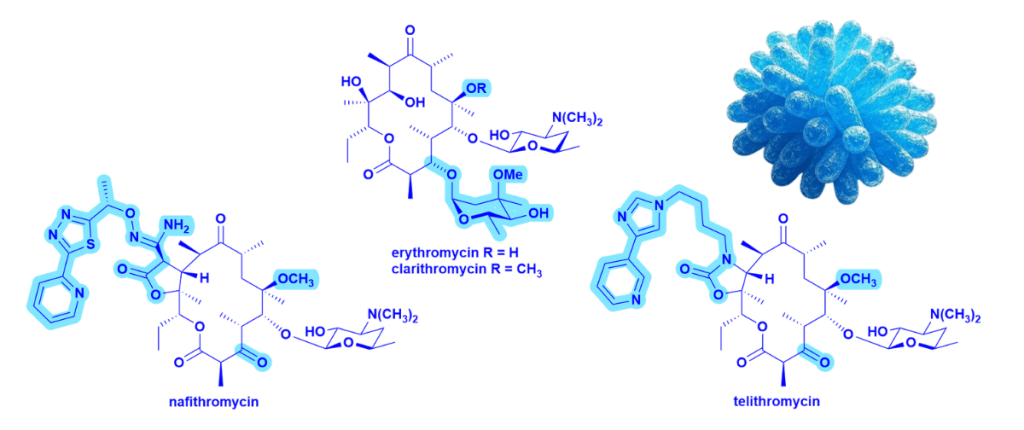
Table: Differences between 14-membered macrolides such as erythromycin and clarithromycin and the ketolides nafithromycin and telithromycin – see structures in the figure below.

FeaturesMacrolidesKetolides
C3 cladinosePresentRemoved and replaced with a keto group
C11–C12 carbamate/aryl-alkyl extensionNot presentAdded side chain improves ribosomal binding and helps to overcome some resistance mechanisms
Overall bindingBinds to domain V of 23S rRNABinds to domain V and domain II of 23S rRNA → stronger binding
Structures of erythromycin, clarithromycin, nafithromycin and telithromycin (structure differences highlighted in blue), along with a stylised image of bacteria made with the assistance of Grok.

Why It Matters

  • Nafithromycin targets drug-resistant CABP, a major killer with over 3 million deaths globally yearly with India bearing ~25% of this burden.
  • Nafithromycin is India’s first ‘home grown’ antibiotic to be granted approved.
  • For over 25 years, Wockhardt has focused its drug discovery efforts on the discovery and development of new antibiotics to treat MDR infections.
  • The company previously introduced levonadifloxacin (IV) and alalevonadifloxacin (oral) in 2019 and continues to build an impressive antibiotic pipeline.
  • This is a proud milestone for Indian drug discovery and a timely addition in the fight against antimicrobial resistance. It will be fascinating to watch how the launch unfolds in India, and whether this innovation finds its way to global markets.

Antibiotics for back pain? It might sound surprising, but the science is compelling

Linezolid, an oxazolidinone-class protein synthesis inhibitor, has been approved since 2000 and is used to treat Gram-positive infections like MRSA. But now, it’s stepping into an entirely new arena: chronic lower back pain.

Why antibiotics?
Emerging research suggests that bacterial infections in herniated disc tissue—think Cutibacterium acnes or coagulase-negative Staphylococcus—is an underlying driver of pain for some patients. The problem? Discs are poorly vascularized, making it difficult for systemic antibiotics to reach therapeutic levels. Past studies with oral amoxicillin alone and in combination with clavulanic acid showed modest pain relief, but directly delivering antibiotics to the infected disc could be a game-changer.

Enter PP353 from Persica Pharmaceuticals
This injectable formulation of linezolid, iohexol (for imaging), and a thermosensitive gel is designed to target degenerate lumbar discs. Once injected, it provides prolonged, high-concentration linezolid exposure at the infection site. Persica’s recent Phase 1b trial results in patients with Modic Type 1 changes (a marker of disc inflammation) are promising—hinting at a future where we treat the root cause of bacterially mediated pain, not just the symptoms. If successful, this approach could also reduce reliance on long-term opioid use.

See Persica’s publications here.

Could this approach transform how we treat chronic back pain worsened by infection?

Structure of linezolid and a stylised image bacteria in the shape of a spine (image co-created with Grok)

FDA Greenlights Gepotidacin: The First New Oral Antibiotic for UTIs in 30 Years

A breakthrough in the fight against antimicrobial resistance: The US FDA has approved gepotidacin (Blujepa), a first-in-class triazaacenaphthylene oral antibiotic from GSK, on 25 March 2025 for uncomplicated urinary tract infections (uUTIs) in women and girls aged 12+. GSK plans a US launch in the second half of 2025.

What excites me most?
🔹A long-awaited innovation – The first new oral antibiotic for uUTIs in nearly 30 years, introducing a novel bacterial Type II topoisomerase inhibitor chemotype.
🔹Broad-spectrum activity – Targets problematic pathogens like Escherichia coli, Klebsiella pneumoniae, Citrobacter freundii complex, Staphylococcus saprophyticus, and Enterococcus faecalis.
🔹A model for public-private collaboration – Developed with support from BARDA and the Defense Threat Reduction Agency, highlighting the power of partnerships in tackling urgent health challenges.
🔹Bonus potential – Also in late-stage development for treating uncomplicated urogenital gonorrhoea.

With over half of women facing a uUTI in their lifetime and resistance eroding existing options, Blujepa could be a game-changer. How do you see this approval impacting patient care and the fight against AMR?

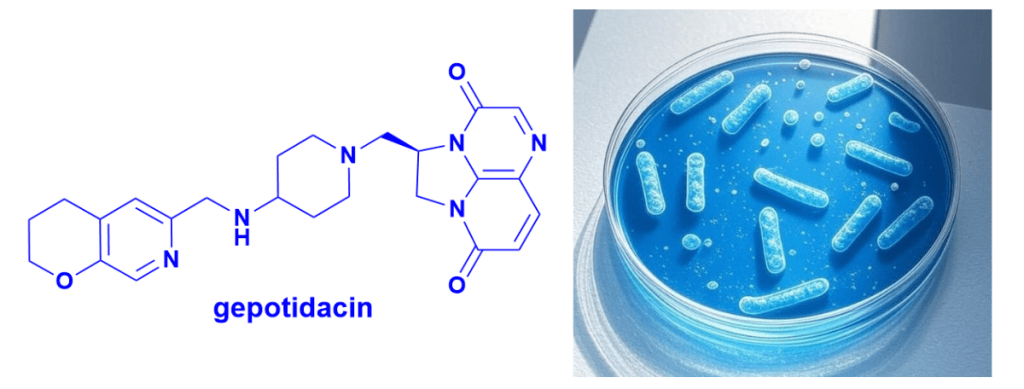
Structure of gepotidacin and a stylised a petri dish (created by Grok), highlighting its role as a new treatment for uncomplicated urinary tract infections.

Highly Cited Researcher in 2024

I am delighted to share that I have been named a Clarivate Analytics Highly Cited Researcher for 2024, marking the sixth time I have received this honour: Pharmacology & Toxicology in 2016, 2017, 2022, 2023 and 2024, and Cross-Field in 2021.

This achievement would not have been possible without the invaluable contributions of my colleagues, both past and present. Your insights, dedication, and support have been instrumental in shaping our research and amplifying its influence on the field. Thank you for being an integral part of this journey!