Blog

FDA Greenlights Gepotidacin: The First New Oral Antibiotic for UTIs in 30 Years

A breakthrough in the fight against antimicrobial resistance: The US FDA has approved gepotidacin (Blujepa), a first-in-class triazaacenaphthylene oral antibiotic from GSK, on 25 March 2025 for uncomplicated urinary tract infections (uUTIs) in women and girls aged 12+. GSK plans a US launch in the second half of 2025.

What excites me most?
🔹A long-awaited innovation – The first new oral antibiotic for uUTIs in nearly 30 years, introducing a novel bacterial Type II topoisomerase inhibitor chemotype.
🔹Broad-spectrum activity – Targets problematic pathogens like Escherichia coli, Klebsiella pneumoniae, Citrobacter freundii complex, Staphylococcus saprophyticus, and Enterococcus faecalis.
🔹A model for public-private collaboration – Developed with support from BARDA and the Defense Threat Reduction Agency, highlighting the power of partnerships in tackling urgent health challenges.
🔹Bonus potential – Also in late-stage development for treating uncomplicated urogenital gonorrhoea.

With over half of women facing a uUTI in their lifetime and resistance eroding existing options, Blujepa could be a game-changer. How do you see this approval impacting patient care and the fight against AMR?

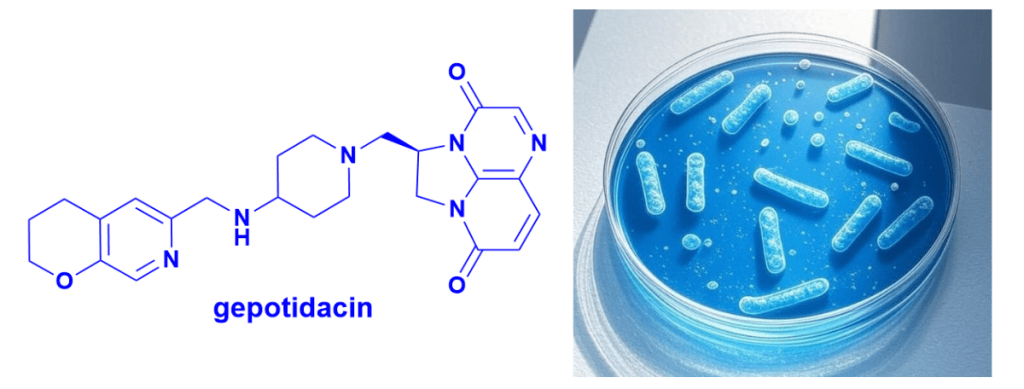
Structure of gepotidacin and a stylised a petri dish (created by Grok), highlighting its role as a new treatment for uncomplicated urinary tract infections.

Highly Cited Researcher in 2024

I am delighted to share that I have been named a Clarivate Analytics Highly Cited Researcher for 2024, marking the sixth time I have received this honour: Pharmacology & Toxicology in 2016, 2017, 2022, 2023 and 2024, and Cross-Field in 2021.

This achievement would not have been possible without the invaluable contributions of my colleagues, both past and present. Your insights, dedication, and support have been instrumental in shaping our research and amplifying its influence on the field. Thank you for being an integral part of this journey!

On the importance of compound purity and QC

This recent letter in Antimicrobial Agents and Chemotherapy from authors from Paratek Pharma on the purity and/or stability of commercially purchased omadacycline tosylate was of interest. Omadacycline is a semi-synthetic tetracycline derivative approved for the treatment of bacterial infections (CABP and CSSSI). In this study, powder from a commercial vender was found to ~53% (wt/wt) omadacycline tosylate when compared to the authentic Paratek omadacycline tosylate drug substance. The purchased material was also amorphous and not crystalline. The remaining material was composed primarily of known impurities without microbiological activity. While this could change an MIC one-fold (not ideal), it could have consequences in other studies.

In another recent publication in Journal of Pharmaceutical and Biomedical Analysis, which was recently discussed by Derek Lowe, workers at Genentech highlighted the importance of investigating drug substance mass balance. They found that azetidine oligomers were present in the drug batch that were not observable by standard NMR, LC, ICP and GC methods. Metal impurities also well known and can cause issues in bioassays, potential toxicity and cause mayhem with drug batch reproducibility.

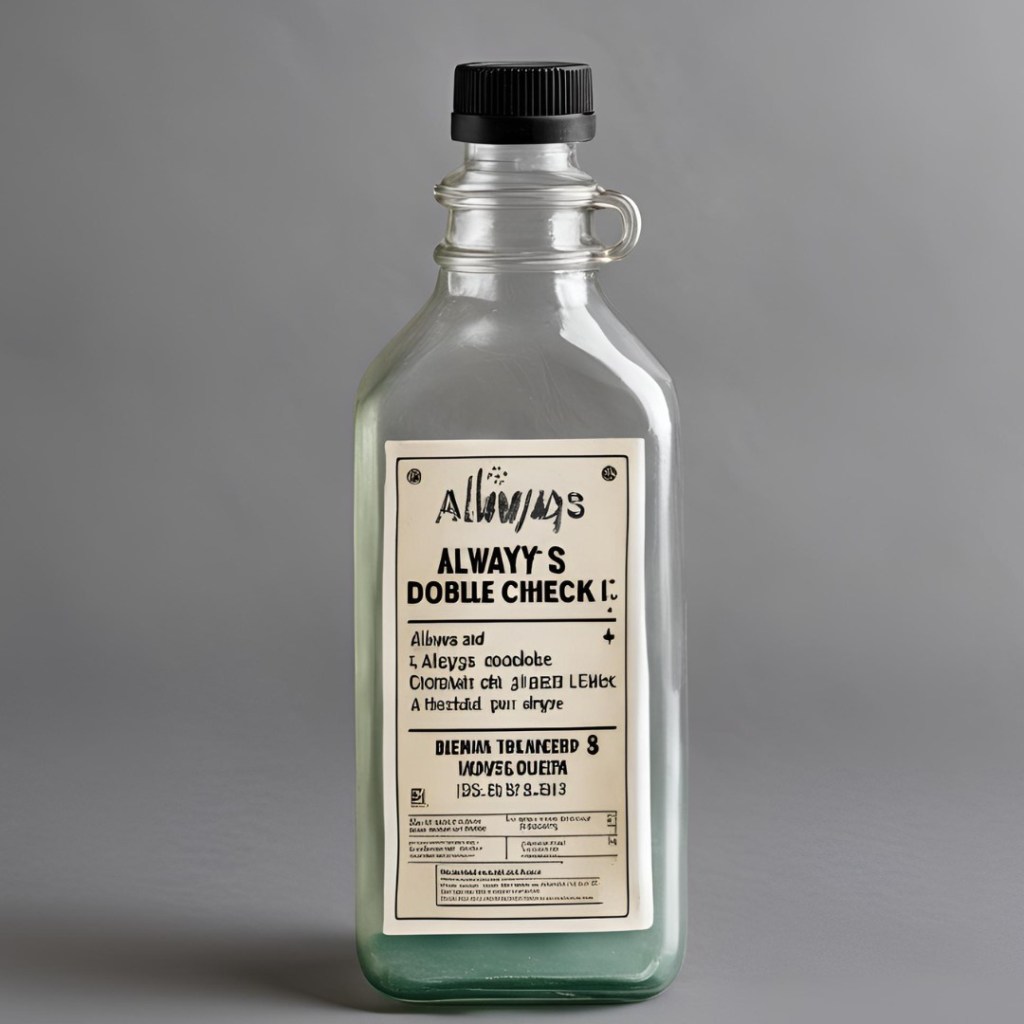
The most egregious issues can occur when the compound label does not correspond to what’s in the container. Probably the most (in)famous case was when an MDMA (‘ecstasy’) bottle was mislabelled as methamphetamine. This led to a 2003 retraction of a 2002 Science paper that initially claimed that MDMA was as toxic to primates as methamphetamine (also see commentary). There are also residual effects of the initial reports, as the retraction was not as visible in mainstream newspapers – see this article in Journal of Psychoactive Drugs. If you want to delve deeper, Retraction Watch has a specific category devoted to ‘wrong reagents’.

So, it’s always advisable to look for data anomalies, even if they are slight. Also, don’t 100% rely on what is written on the label.

Review of antibacterial candidates with new MoA

Have you ever wondered what the new antibacterial strategies are?

As part of my work with the Institute for Molecular Bioscience at UQ, we have just published an open access review in ACS Infectious Diseases of antibacterial candidates in clinical trials published , as well as selected compounds still in the early stages of development, that have modes of action (MoAs) not found in marketed antibacterial drugs (antibiotics). Our hope is that this review will encourage further research into new treatment options for drug-resistant infections.

Searching for new antibacterial drugs

Hear, hear! Discovery and development (to date) of ORC-13661

A clinical candidate being evaluated for aminoglycoside ototoxicity

You never know what you will find in the literature. A search for new antibacterials that have entered clinical trials identified ORC-13661, which I had not previously heard of. Despite being involved with antibacterial R&D for many years, I knew little about drugs being developed to help reduce hearing loss.

Background. Although aminoglycoside antibiotics have broad spectrum activity against most pathogens, their use is usually restricted due to potential side effects that include ototoxicity (irreversible hearing and balance problems) and nephrotoxicity (kidney damage). This is also ototoxicity issues with other drugs such as anticancer drug cisplatin. Therefore, therapies that could be co-administered with any potential ototoxic drugs could significantly reduce or even eliminate hearing loss. A review of hearing loss treatments currently in development and future perspectives was recently published for those interested.1

Discovery of ORC-13661 and proposed mechanism. Researchers at The University of Washington used a zebrafish neuromast hair cell protection assay to look for compounds that protect these mechanosensory hair cells in free-swimming larvae against aminoglycoside (neomycin)-induced cell death.2 These cells are very sensitive to aminoglycoside associated damage or death and can be used to identify both enhancers and suppressors of ototoxic activity. One of the small molecules identified in the zebrafish screen was the thiophene-urea carboxamide ORC-001. Although ORC-001 was active in an in vivo aminoglycoside-induced hearing loss rat model, improvements were required in solubility, oral bioavailability, and half-life, as well as reduced hERG inhibition. Additionally, ORC-001 exhibited gradual partial air mediated oxidation, which is not ideal for a potential drug. As part of this study, over 400 analogues, including amines and quaternary ammonium salts, were synthesised, and evaluated in the zebrafish assay with ORC-13661 chosen for clinical development (US9,493,482 patent). Further studies showed that ORC-13661 was able to protect sensory hair cells from aminoglycoside and cisplatin ototoxicity in in vitro and in vivo studies.3,4 The mechanism by which ORC-13661 reduces cell toxicity is based on direct competition with aminoglycosides for access to the mechanoelectrical transducer (MET) channel, and for cisplatin by a MET-dependent mechanism.3

Clinical development of ORC-13661. The University of Washington licensed ORC-13661 to Oricula Therapeutics (Seattle, WA, USA), who announced the successful completion of a phase-I ascending dose safety study in August 2018. Oricula licensed ORC-13661 to Decibel Therapeutics (Boston, MA, USA; development code DB-041) in September 2018, but no further clinical evaluation was undertaken. However, a new phase-II trial (NCT05730283) was recently registered by the Oregon Health and Science University, which is scheduled to start in mid-2024. This trial will evaluate whether hearing loss can be prevented in patients with non-tuberculosis Mycobacteria (NTM) infections undergoing treatment with intravenous (IV) amikacin (aminoglycoside). It will be interesting to follow this trial and others in the hearing loss area.

References.

  1. Joey Lye et al., Recent therapeutic progress and future perspectives for the treatment of hearing loss, Biomedicines, 2023, 11, 3347.
  2. Sarwat Chowdhury et al., Phenotypic optimization of urea−thiophene carboxamides to yield potent, well tolerated, and orally active protective agents against aminoglycoside-induced hearing loss, J. Med. Chem., 2018, 61, 84−97.
  3. Siân R. Kitcher, et al. ORC-13661 protects sensory hair cells from aminoglycoside and cisplatin ototoxicity. JCI Insight, 2019, 4, e126764.
  4. Joseph A. Bellairs et al., An in vivo biomarker to characterize ototoxic compounds and novel protective therapeutics, Front. Mol. Neurosci., 2022, 15, 944846.

Ceftobriprole medocaril – background, FDA approval and antibiotic prodrugs

Mark Butler and David Paterson

Background. Ceftobiprole medocaril (Zevtera®) has recently been in the news as Basilea Pharmaceutica was granted approval for Zevtera® by US FDA on April 2024 for treatment of adult patients with (1) methicillin-susceptible and methicillin-resistant Staphylococcus aureus (MSSA and MRSA) bacteraemia, including right-sided infective endocarditis, (2) acute bacterial skin and skin structure infections (ABSSSI) and (3) community acquired bacterial pneumonia (CABP). The structure of ceftobiprole (BAL 9141, Ro 63-9141) was first disclosed in a 1999 patent from Hoffmann La Roche and its prodrug ceftobiprole medocaril in 2001 (Fig. 1). Ceftobiprole has in vitro antimicrobial activity against a broad range of Gram-positive and Gram-negative pathogens. Notably this includes MRSA which is highly unusual for a cephalosporin. Ceftobiprole has a much higher affinity for PBP-2a than first, second, third and fourth generation cephalosporins.

Persistence Pays Off in the End. The development of Zevtera® has been a long time coming, with a number of clinical development roadblocks encountered along the way. Pivotal trials for complicated skin and skin structure infections (cSSSI), CABP, hospital-acquired bacterial pneumonia (HABP) and ventilator-associated bacterial pneumonia (VABP) were conducted at more than 150 sites from 2005 to 2007 in a collaboration between Basilea and J&J. Neither FDA nor EMA approval was granted at that time because of regulatory concerns related to clinical trial conduct at some trial sites. This led to a lawsuit against J&J, with a Dutch court eventually awarding Basilea $130 million for breach of the licence agreement. As a result, Basilea took total control of subsequent clinical trials – an ABSSSI trial was repeated and a landmark trial of ceftobiprole for complicated S. aureus bloodstream infections. It is these trials that led to the recent US FDA approval. Zevtera® has been previously approved in Canada and 14 European countries from 2013 with future expansion plans.

Medocaril/Medoxomil Antibiotic Prodrugs. Zevtera® is administered intravenously (IV) as the prodrug as ceftobiprole has low water solubility at physiological pH. Ceftobiprole medocaril is rapidly hydrolysed by plasma esterases and transported around the body. The related medoxomil prodrug moiety is present in lenampicillin and faropenem medoxomil (Fig. 2). This prodrug strategy is subtly different to using a prodrug to enhance oral dosing (e.g. contezolid acefosamil, Fig. 2).

The carbamate containing medocaril and carbonate containing medoxomil prodrugs metabolise to give the drug, diacetyl (food flavour!) and carbon dioxide (CO2) – see a metabolism study for olmesartan medoxomil, which is an angiotensin II type 1 receptor antagonist used for antihypertension (Fig. 3). Bioactivation of this type of prodrug is due to esterase enzymes such as carboxylesterases, cholinesterases, and paraoxonases, which are widely distributed in biological fluids and tissues found throughout the body.