
What is Nafithromycin?
- Nafithromycin (development code WCK 4873) is an orally bioavailable ketolide developed by Wockhardt Limited with broad spectrum antibacterial activity against respiratory pathogens: Gram-positive bacteria such as S. pneumoniae and S. aureus and Gram-negatives such as Haemophilus influenzae, Moraxella catarrhalis, Legionella pneumophila, Mycoplasma pneumoniae and Chlamydophila pneumoniae.
- Nafithromycin (brand name Miqnaf®) was approved by India’s CDSCO on January 2, 2025, for the treatment of community-acquired bacterial pneumonia (CABP).
- Nafithromycin is the second ketolide ever approved globally, the first was telithromycin (approved in 2001), which is no longer in use.
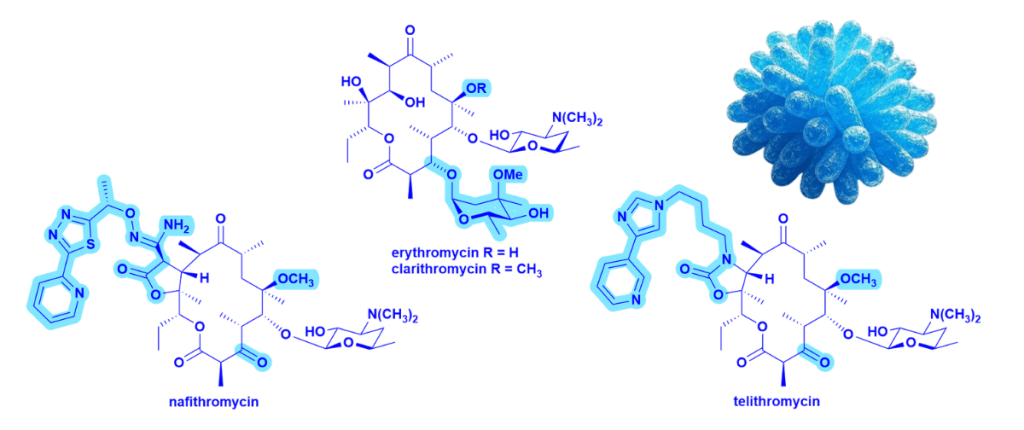
Table: Differences between 14-membered macrolides such as erythromycin and clarithromycin and the ketolides nafithromycin and telithromycin – see structures in the figure below.
| Features | Macrolides | Ketolides |
| C3 cladinose | Present | Removed and replaced with a keto group |
| C11–C12 carbamate/aryl-alkyl extension | Not present | Added side chain improves ribosomal binding and helps to overcome some resistance mechanisms |
| Overall binding | Binds to domain V of 23S rRNA | Binds to domain V and domain II of 23S rRNA → stronger binding |
Why It Matters
- Nafithromycin targets drug-resistant CABP, a major killer with over 3 million deaths globally yearly with India bearing ~25% of this burden.
- Nafithromycin is India’s first ‘home grown’ antibiotic to be granted approved.
- For over 25 years, Wockhardt has focused its drug discovery efforts on the discovery and development of new antibiotics to treat MDR infections.
- The company previously introduced levonadifloxacin (IV) and alalevonadifloxacin (oral) in 2019 and continues to build an impressive antibiotic pipeline.
- This is a proud milestone for Indian drug discovery and a timely addition in the fight against antimicrobial resistance. It will be fascinating to watch how the launch unfolds in India, and whether this innovation finds its way to global markets.
 MSBChem Consulting